Across the world, momentum is building to tax extreme wealth. From direct wealth taxes to reforms on capital gains and inheritance, the policy solutions to the inequality crisis are increasingly clear. But there’s a critical gap in the debate: implementation.
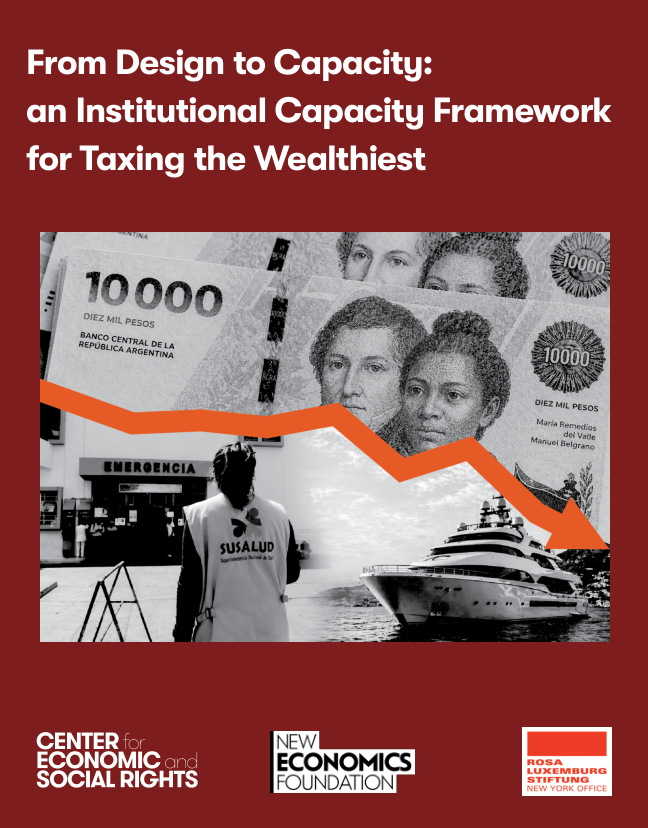
A new resource from CESR and the New Economics Foundation, From Design to Capacity: an Institutional Capacity Framework for Taxing the Wealthiest, argues that the real challenge isn’t just what to tax, but whether governments have the institutional capacity to make it work in practice.
Extreme wealth is often hidden behind offshore structures, complex ownership arrangements, and legal loopholes that present huge challenges to identifying, valuing, and taxing wealth. States also face fragmented data systems, legal constraints, and intense political pressure from well-resourced elites.
The result? Persistent enforcement gaps and reforms that stall, weaken, or fail to come to fruition.
This report is designed to help activists, policymakers, and practitioners diagnose these challenges and push for reforms that are not only ambitious but durable. Drawing on experiences from Argentina and Brazil, it shows that capacity isn’t fixed: it can be built through strategic action.
If we’re serious about taxing the wealthiest, policy design alone isn’t enough. We need to invest in the political, legal, administrative, and data systems that make enforcement both possible and sustainable.
And to complement this new resource, we have also published two in-depth case studies on the recent experiences of Argentina and Brazil in implementing taxes on extreme wealth.