CESR_IMF_surcharges_humanrights_13oct2026.pdf
DOWNLOAD FILE3.6 MB pdf

As the IMF and World Bank Annual Meetings continue in Bangkok, one question demands an answer: Why is the IMF making countries in crisis pay even more for the financial support they desperately need?
A new briefing from CESR shows how the IMF's controversial surcharge policy is doing more than draining public resources. It is reinforcing austerity, undermining human rights and contributing to the erosion of democracy.
 Drawing on evidence from Argentina, Ecuador, Egypt, Jordan and Pakistan, the briefing reveals a deeply regressive pattern: IMF-backed austerity squeezes essential public services, fuels social unrest and creates conditions in which governments increasingly resort to repression, restrictions on protest and other authoritarian measures.
People are being made to pay twice: first through cuts to the services they depend on, and then through the shrinking of their democratic freedoms when they resist. And while communities bear the consequences, decisions shaping their futures are too often made behind closed doors, with little democratic scrutiny.
In 2026 alone, 12 countries will pay approximately US $1.7 billion in surcharges, money that could instead for example fully vaccinate 23 million children.
CESR is calling for the abolition of IMF surcharges, mandatory human rights impact assessments and genuine democratic accountability in IMF decision-making.
As world financial leaders gather in Bangkok, it behooves them to be mindful that, in an era of rising authoritarianism, debt repayment cannot take priority over people's rights, livelihoods and democratic freedoms.
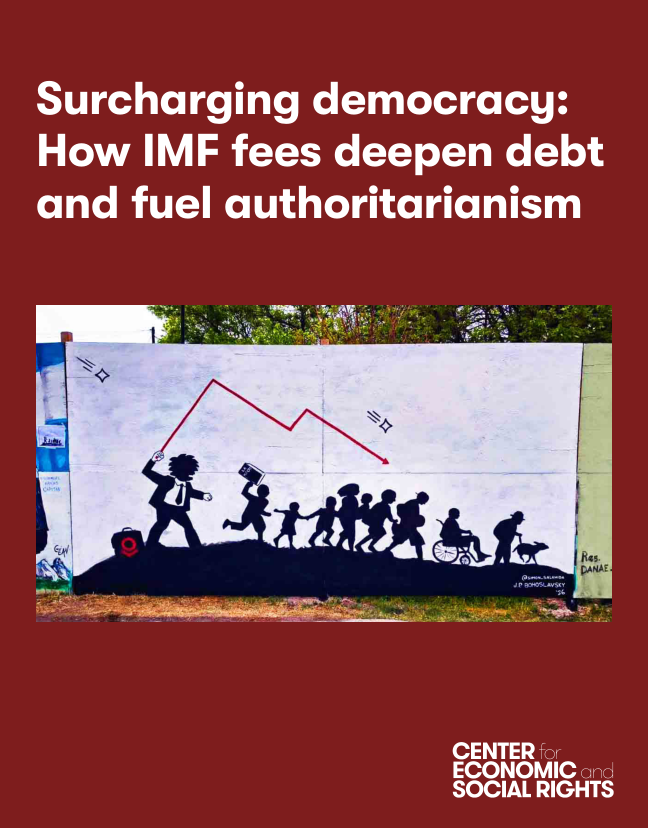
Mural ‘El Látigo’ (‘the Whip’) by Simón Salamida, visual artist, and Juan Pablo Bohoslavsky, researcher at the National Scientific and Technical Research Council (CONICET) and the National University of Río Negro.