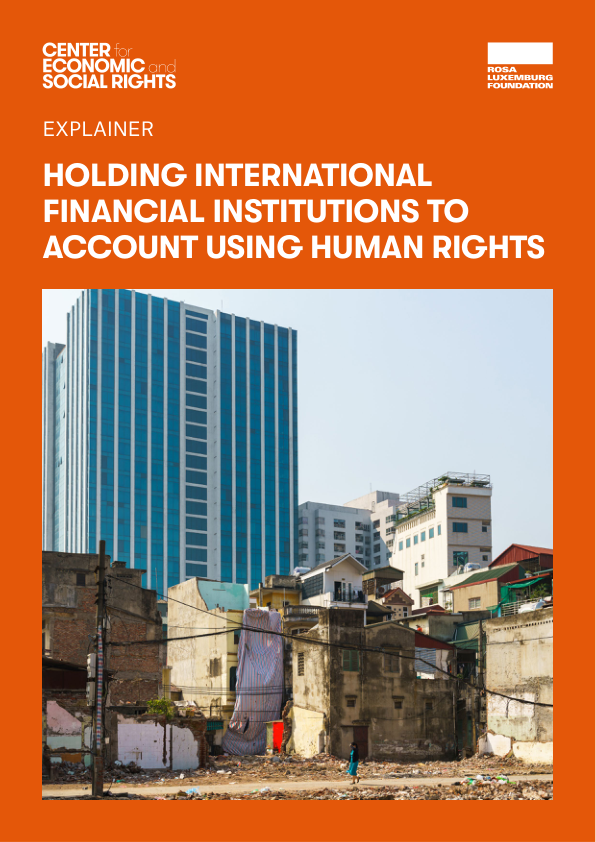
Holding International Financial Institutions to Account Using Human Rights
DOWNLOAD FILE2.1 MB pdf
International financial institutions like the IMF and the World Bank play a powerful role in shaping economic policy around the world. Their policy prescriptions and financial conditionalities determine whether governments can adequately fund essential public services like healthcare, education, housing, and social protection.
These decisions are not simply technical or economic; they have profound implications for the full spectrum of human rights outcomes.
This new explainer from the Center for Economic and Social Rights, with support from the Rosa Luxemburg Foundation, examines the human rights responsibilities of IFIs and the obligations of states that govern them. It explores how international human rights law applies to global economic governance and why IFIs cannot be treated as neutral actors when their policies have such fundamental influence over national priorities and public spending.
The report shows how measures frequently associated with IFI programs, including austerity policies, subsidy cuts, and privatization, often undermine economic and social rights and deepen inequalities. It also examines the gendered impacts of these policies, which frequently place disproportionate burdens on women and marginalized communities.
In so doing, it argues for reorienting IFI policies toward a rights-based economy that prioritizes human dignity, equality, and accountability in global economic decision-making.