Centering human rights in critical minerals and advancing a Rights-Based just transition
This is the second in a multi-part CESR blog series on the just transition. The first blog situates the newly established Just Transition Mechanism within CESR's broader work on fiscal justice and human rights-based climate finance. This blog, by CESR Climate Justice Associate Peninnah Mbabazi Tashobya, examines what a rights-based just transition looks like in practice with a focus on critical minerals and Africa's green industrialization.
As the first blog in this series sets out, the Just Transition Mechanism established at COP30 represents a hard-won but fragile victory. Its progressive rights-based language, recognizing labor rights, human rights, and the right to a clean and healthy environment, marks the furthest COP has gone in addressing the rights of workers and frontline communities. Yet the mechanism's final text notably omitted explicit references to critical minerals, leaving unresolved one of the most consequential and rights-laden dimensions of the energy transition. As momentum builds toward COP31 in Antalya, that omission demands urgent attention.
The growing global demand for critical minerals is placing Africa at the center of the energy transition. Ensuring that this demand translates into climate justice rather than renewed extractivism will require governance frameworks grounded in human rights, fiscal justice, and equitable development, the very principles that must now drive the Just Transition Mechanism.
The global demand for the critical minerals and Africa’s quest for green industrialization
The global push for a net-zero future is driving a seismic shift in the world economy. As countries accelerate their efforts to decarbonize by 2040, the new high-stakes commodity is no longer oil, but a host of critical minerals often referred to as green minerals. The transition from fossil fuels to renewable energy will require a dramatic increase in supply: global demand for copper and rare earth elements is projected to rise by up to 40%, nickel and cobalt by at least 60%, and lithium by as much as 90% over the next two decades (IEA Report). The critical mineral supply for renewable energy sources alone may need to quadruple, with at least $800 billion needing to be invested in new sources.
This new demand places Africa, a continent that suffers some of the worst consequences of climate change despite having contributed least to it, at a pivotal crossroads. According to the International Monetary Fund (IMF) Regional Economic Outlook report, Africa holds about 30% of the global mineral reserves that are essential for low-carbon technologies with exploration spending rising by 12% in 2024, driven by the demand for green minerals. Africa hosts 6% of copper, 53% of cobalt, 25% of bauxite, 21% of graphite, 46% of manganese, 35% of chromite, 79% of phosphate rock, and 91% of platinum group metals. The Democratic Republic of Congo (DRC) alone provides more than 70% of the global supply of cobalt, and huge copper deposits in Zambia and Zimbabwe are among the top six sources of lithium globally, while South Africa is rich in manganese.
Despite this extraordinary mineral wealth, UNCTAD reports that Africa’s share in the global exports of critical minerals is strikingly low, with 8.3% merely for raw, and 3.8% for processed critical minerals, respectively.
Africa’s green industrialization is caught between big power priorities. The United Nations Economic and Social Council (ECOSOC) states that developed nations depend on decarbonization and secure partnerships for green tech, while Africa's industrialization relies on both regional and global markets and requires a fundamental shift in international finance for green energy and industry. Furthermore, developing countries face many of the challenges of the past in terms of constraints in productive capacities, financial resources and policy space. These are aggravated by increasingly integrated and interdependent global markets and a rapidly shrinking carbon space.
Officially launched by African leaders at COP28 in December 2023, the Africa Green Industrialization Initiative (AGII) was designed to facilitate one of the key objectives of the Nairobi Declaration on Climate Change; to advance green industrialization across the continent. The pledge by African banks to deliver $100 billion in support of the AGII during the Second Africa Climate Summit (ACS2) demonstrates the continent’s collective determination to frame, own, and finance its development agenda.
Africa’s collective ‘ambition to define its own economic and climate pathway’ was reaffirmed at the Africa Climate summit. Altogether, the return of global industrial policy, the ongoing erosion of established trade regimes, Africa’s massive renewable energy potential, and global demand for Africa’s energy transition minerals, provide the Continent with an historic opportunity to reset its industrial policies and pathways (Powershift Africa, 2026).
During COP30, the Belém Declaration on Global Green Industrialization acknowledged this tension directly. It affirmed that green industrialization must address rather than deepen global inequalities, and must empower countries and regions to lead their own decarbonization agendas while creating quality jobs and protecting the environment. Turning that declaration into reality requires moving well beyond rhetorical commitment.
The human rights crisis at the heart of critical mineral extraction
The race for critical minerals is already exacerbating human rights abuses, deepening inequality, and fuelling global unrest. Rather than enabling a fair and just transition for communities and countries, it is reinforcing long-standing patterns of exploitation.
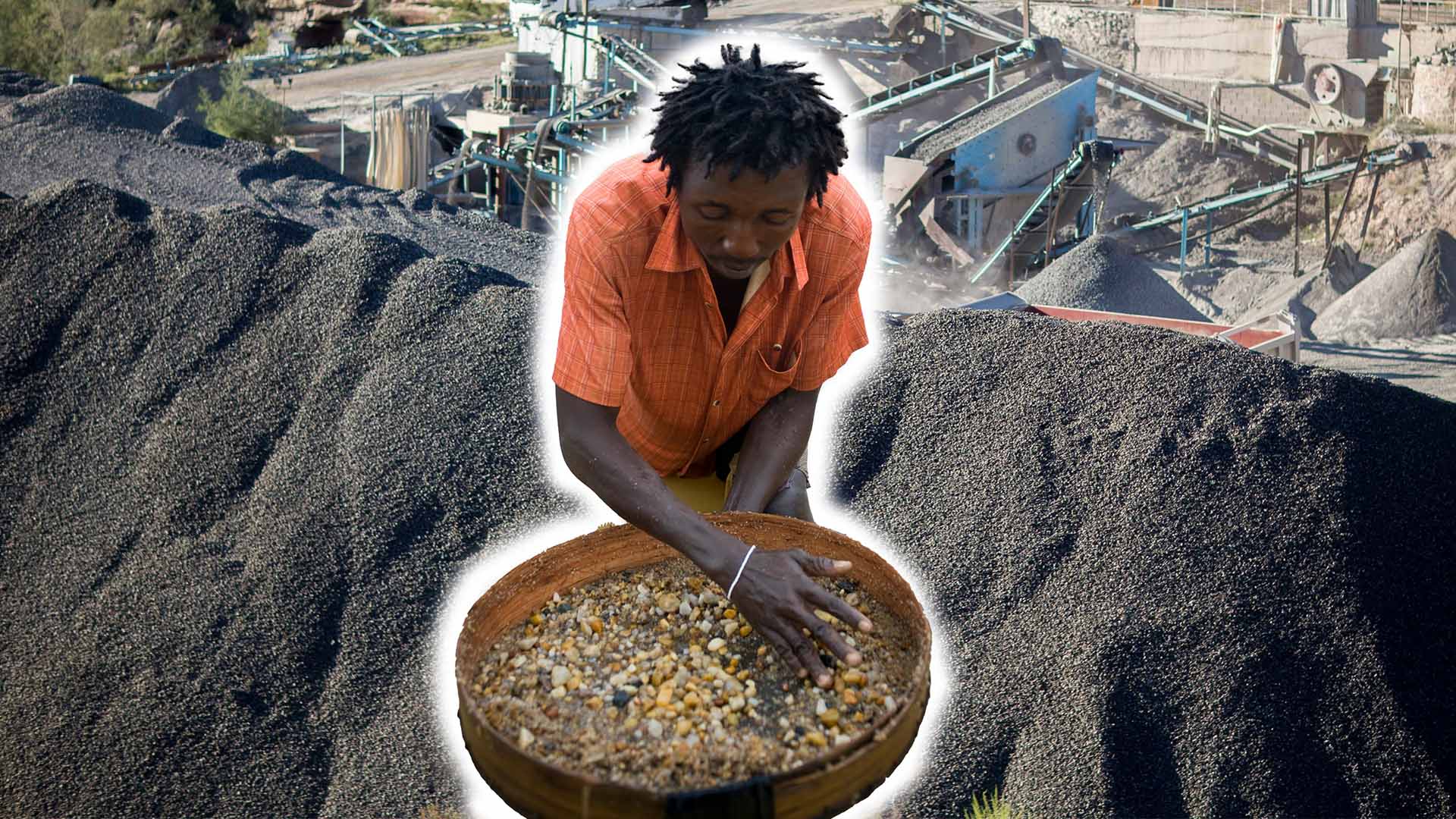
The cobalt mines of the Democratic Republic of the Congo offer a stark illustration. Child labor in artisanal cobalt mining has been extensively documented by the African Development Bank (AFDB, 2019), representing a human rights failure that the clean energy industry has been far too slow to confront. The parallels with the coal mining industry of the early 19th century are uncomfortable: nearly 200 years after safety and labor abuses first drove the development of mining law, the same patterns persist in different parts of the world and under different economic conditions.
Additionally, major concerns have been raised about the implications of critical energy transition minerals for women’s participation in the mining sector. Women account for just 10% to 13% of the global industrial mining workforce, yet in some cobalt-producing areas of the Democratic Republic of the Congo, they represent up to 40% of artisanal and small-scale miners. Women have typically been concentrated in lower-paid, hazardous activities such as washing and sorting ore, frequently without protective equipment. Without deliberate inclusion policies, technological upgrading risks reinforcing existing gender gaps and confining women to informal or low-productivity roles even as investment and export revenues expand (UNCTAD, 2026).
The environmental implications of mining have also led to severe environmental degradation, resulting in massive land loss and significant food insecurity for local communities. The extraction process destroys forests and biodiversity, while hazardous chemical runoff ruins soil quality and pollutes water sources, making farmland barren and reducing agricultural productivity.
During recent discussions at this year’s African Mining Indaba and African Union Summit policymakers, leaders, and civil society actors proposed UN Guidance for Action on Critical Energy Transition Minerals to ensure such minerals are extracted and used in ways that advance human rights, social and environmental protections and equitable development. Public participation, people-centred decision-making and access to information must be prioritized in all just transition initiatives to guarantee the right to access information, to access justice and to remedies as enshrined in the International Covenant on Civil and Political Rights.
As the first blog in this series argues, the fiscal architecture of the just transition is as important as its governance frameworks. A truly just transition must address the deep inequalities in how climate finance is structured and delivered, ensuring that the shift to a low-carbon economy advances economic, labor, and social rights rather than undermining them.
The Road Ahead
CESR, alongside civil society organizations and movements from across the world, emphasized through an open letter ahead of the First Conference on the Transition Away from Fossil Fuels that the energy transition cannot move forward without acknowledging international responsibility, climate debt, and the mechanisms for reparations for the loss and damage already faced by communities in the Global South.
Africa is not simply a supplier of the materials the world needs for its green future. It is a continent of people with human rights and the sovereign capacity to shape their own development path. The just transition must honor that as a structural commitment. Whether the mechanisms now being built in the UNFCCC system rise to that challenge will depend on who shapes them, and on whose rights they protect.
As the world looks ahead to COP31 in Antalya, a roadmap for the Just Transition Mechanism is becoming increasingly urgent. The governance of critical minerals and the broader energy transition should be centered on justice and accountability. Ensuring that requires that the transition centers human rights, strengthening public finance, and guaranteeing meaningful participation of children, women workers, and Global South communities.